Leaders Think Gen Z Doesn’t Want to Work. Here’s Why They Are Wrong

The Headline Everyone Is Tired Of Reading: Gen Z Doesn’t Want To Work
In late January, the headline “Davos attendees can’t stop hating on Gen Z” appeared on my newsfeed. For some reason, these leaders think that Gen Z doesn’t want to work.
It was the daily story from the annual meeting of the World Economic Forum, so one would think they would have something more constructive to discuss.
I had been following the updates on Davos closer than I normally would, as
the WEF has been a fantastic leader in research on creating age-friendly workplace climates. I was looking forward to hearing what might come from sharing that work. That meant the tired clickbait headline about
Kids These Days was even more disappointing than usual.
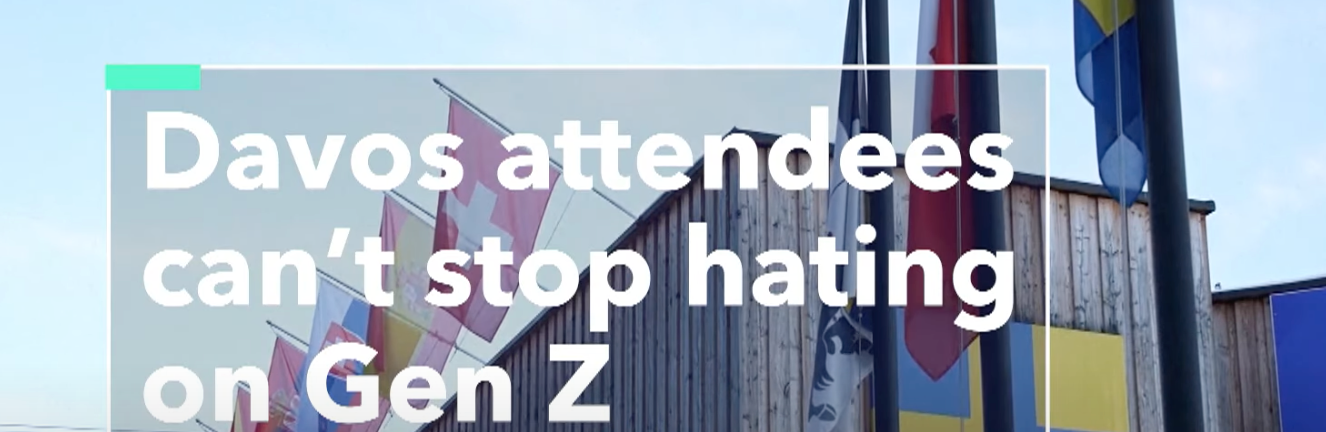
I did watch the YouTube clip where Bloomberg discussed how while the conversations at Davos start with “worldly concerns like climate change or the economy, everyone really just wants to complain about their young workers.”
A few days later, the Washington Post followed up the news with an article titled Hey Gen Z, It’s Not Good to Have Your Boss Hate You.
So the subtitle of my article is “Hey Everyone, You Are Misunderstanding Gen Z and Judging Them Inappropriately in Ways that Will Alienate Your Youngest Workers Indefinitely, and That’s Not Good.
Enough of this “Gen Z doesn’t want to work” narrative.
This kind of rhetoric keeps feeding this mythical generation war in the workplace. It’s tired and exactly what we did when the Millennials entered the workplace.
We saw generational norms different from what past generations had subscribed to. Then we judged those norms as wrong ones because we didn’t understand them. We didn’t like them either. As a result, we alienated a generation. Let’s not do it again.
I’m not negating the frustration of not understanding a segment of your employees or the potential losses workplace experiences when there are misaligned norms on engagement or performance. These are important concerns!
However, I guarantee complaining about what’s wrong with Gen Z will not result in a motivation shift.
So what’s the solution?
We need a little Gentelligence here. (For those just joining this work already in progress, Gentelligence is about understanding the complexities and uniqueness of generational differences in the workplace and using them to create opportunities for intergenerational learning and collaboration).
By applying the 4 Gentelligence practices, what looks like an insurmountable challenge can become an important conversation to create that elusive engagement so many leaders are craving from Gen Z.
First, Practice 1: Identify Assumptions.
“Gen Z just doesn’t want to work.” Beyond the broad brush used to characterize an entire generation, there’s another assumption you might not pick up on here. It’s one I have become more and more aware of the more generational consulting I do. I guarantee it will be a game-changer.
Those making this statement assume that Gen Z defines the concept of “work” the same way they do. That’s not how generational norms work.
Every generation learns the tools and norms they need to survive and thrive in their own time; the formative experiences they have growing up help shape how they see the world and their place in it. A generation collectively decides how they define success based on the social, cultural, economic, and political norms at work during their most impressionable years.
The popular jobs, the people that were most admired and who society holds up as role models as they grow up, and the things they see the prior generation doing that they both agree and disagree with combine to create generational norms.
Observations of Generational Differences
Through my work, I’ve come across so many concepts that we assume those younger and older than us see the same way we do:
- Flexibility
- Balance
- Transparency
- Communication
- And of course…Work.
This is not a new phenomenon. Those of us in Gen X watched many of our Baby Boomer parents devote significant hours to careers (Baby Boomers coined the word “workaholic,” after all.) They defined success based largely on their position on the corporate ladder.
When we pushed back in favor of more work/life balance and a desire for more meaningful work, we were given that “slacker” nickname. It’s one that Gen X has never really been able to shake.
Millennials wanted opportunities at work earlier than prior generations, and we called them entitled.
Inherent in the current leadership lament about Gen Z not being willing to work is an assumption that they define “work” the same way their leaders do. Thus begins the miscommunications and misalignment.
Practice 2: Adjust the Lens.
Once we’ve identified that potentially faulty assumption, it’s time to deploy practice 2.
We tend to see things through our lens (whether age-based or otherwise), often without realizing the lenses of others would show something entirely different and often quite fascinating. To paraphrase Walt Whitman, this is where we need to use curiosity instead of judgment. Here are some questions to get you started:
“I keep reading that leaders feel like Gen Z isn’t interested in working. What do you make of that?”
“When you think about the idea of work (or success, or career…), what does that mean to you? Do you think it means something different to people now than when I started my career?”
Practice 3: Build Trust
As a leader, one of your most essential jobs is creating an environment of psychological safety. If you haven’t come across this term yet, it means ensuring everyone on your team is comfortable with the following:
- feels safe to speak up
- take risks
- ask for help
It’s not a term specific to generationally diverse teams but is particularly important to their success.
We tend to find that older team members are less comfortable asking for help than younger ones. Younger team members may be reluctant to speak up out of concern they will be seen as entitled. These barriers to psychological safety can get in the way of intergenerational learning and collaboration.
Using the momentum from the questions asked in practice 2, we can dig into the answers in a way that demonstrates to Gen Z that we care about their viewpoint. We can also demonstrate to the rest of the team and the organization as a whole that regardless of generation, we are committed to creating a workplace where everyone is engaged and committed to helping the team accomplish its shared mission.
Once we are more confident that everyone agrees on our mission, it’s easier to be open-minded that we all may have different views on how to get there.
A great way to proactively explore these dynamics is to create an intergenerational roundtable. A dedicated session that invites all employees to share their perspectives on the formidable challenges surrounding topics like quiet quitting and the Great Resignation.
With that invitation to share comes a requirement to listen as well. What important (and interesting) differences exist in how employees of different ages, generations, and career stages view the purpose of work? Where do we have more common ground than we realized?
Practice 4: Expand the Pie
The final practice involves moving away from the false dichotomy that for one generation to win, others must lose. It’s rooted in the perspective that our workplaces can benefit from an intergenerational workplace. The opposing view is viewing generational diversity like the plague.
Workplaces that can proactively and successfully create climates that respect diversity are more likely to have successful succession planning. There is research that supports this!
They also tap into different informational networks and leverage complementary skills. Lastly, they have more engaged employees who are less likely to leave.
The three prior practices are fundamental in creating these kinds of age-friendly climates. To go even further, create a mutual mentoring program. It’s my favorite Gentelligence tool. It normalizes the idea that all generations have something to teach as well as something to learn.
Bring together older employees interested in passing down their experience and developing new skills with younger ones. Particularly, those eager to learn from decades of experience. Additionally, there is motivation to share their perspectives and different ways of approaching work.
I have the privilege of working with Gen Z every day. It allows me to add a few things to the sentence “Gen Z doesn’t want to work…”
Gen Z doesn’t want to work for people who are judging them for growing up in a different time and way.
Gen Z doesn’t want to work if it means they lose agency, interest, or engagement with what matters most to them.
Gen Z doesn’t want to work the exact same way everyone else does, and that should be seen as fascinating and important, not as wrong.