Gentelligence is Everywhere These Days: Can you see it?
Megan Gerhardt • February 13, 2021

“It’s not what you look at that matters, it’s what you see.” -Thoreau


I’ve barely been able to keep up over the last few weeks: Gentelligence is everywhere. I know, I know–maybe I’m seeing it everywhere because it’s pretty much where my head is at all the time these days. But there are signs of it everywhere I look. Here’s just a few examples…


The Vaccine Angels.

Two days ago, my brother-in-law (a Gen Xer) texted me that he had managed to snag two vaccine appointments online for my parents (both in their 70s). They’ve been on their county public health list for more than a month. No call so far. My brother-in-law is a high school teacher and has been proactively searching out vaccine appointments. After securing one, he used his internet savvy to see if he could get my parents signed up as well since they are also eligible in the current phase of the rollout.


He got them both appointments on Valentine’s Day. This means he’s our family’s version of a “vaccine angel”.  That term has gained popularity in the last few weeks, referring to younger, tech-savvy citizens who are using their digital prowess to scour the internet to find those scarce vaccine appointments for seniors who need them the most (but are least likely to feel comfortable navigating the online space). That, folks, is a perfect example of Gentelligence in action.
Game Stop

Game Stop.

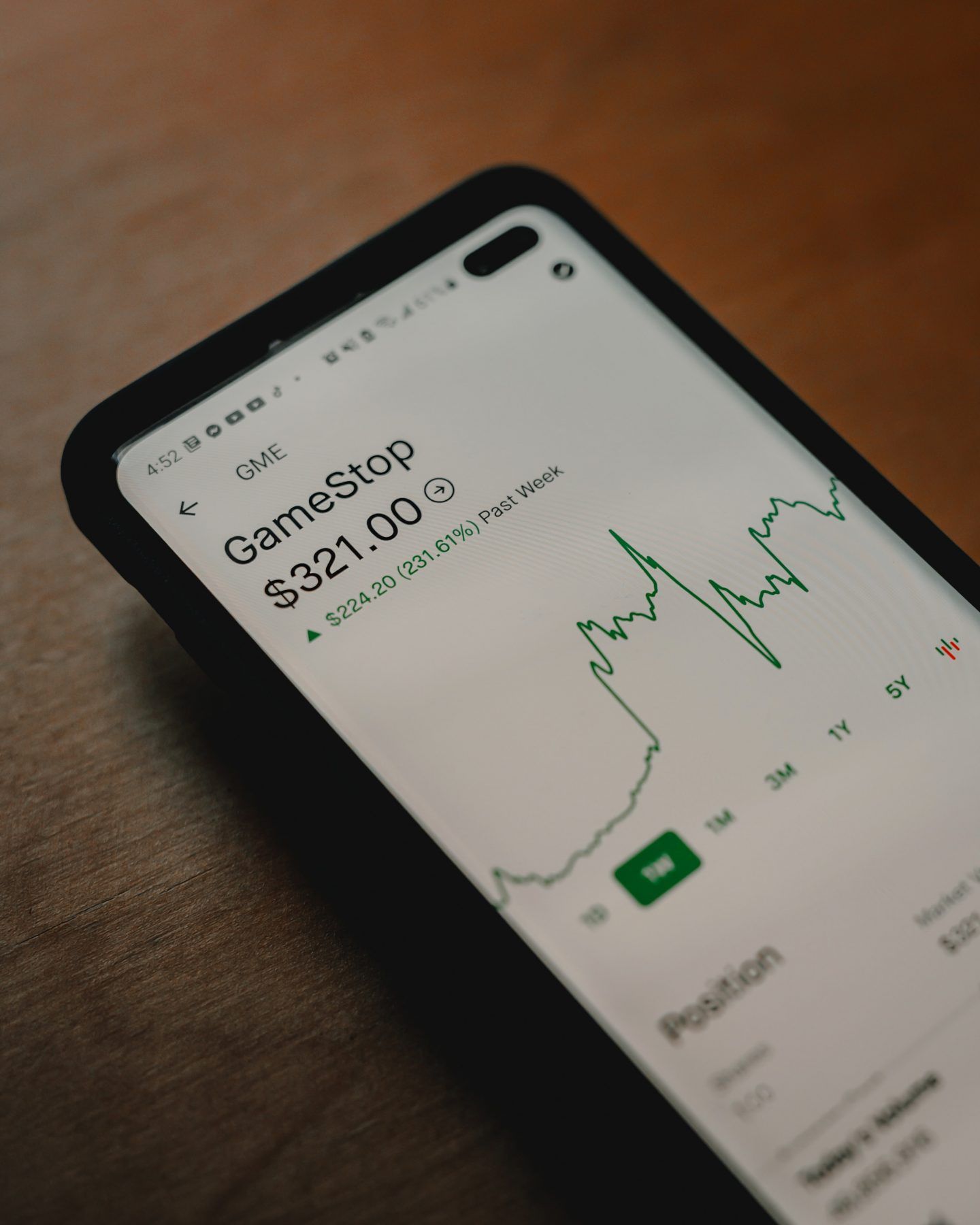
I know there’s a lot of moving parts to the whole GameStop drama. I lack the stock market savvy to speak expertly about the nuances of what really happened. But from where I’m standing, a bunch of Millennials and Gen Zs banded together and used the tools that are clearly the stomping ground of their generations to pull off something fairly extraordinary (and I’m not alone in this view!)


As a (super hip and awesome) Gen Xer, I know Reddit exists. My 15 year-old often texts me Reddit threads that I don’t understand. But if my life or livelihood depended on navigating Reddit, I’d be in trouble. I have friends my age who heard about the Game Stop rebellion and commented, “Man, I should have been in on that!” But really, we weren’t going to be.


Lack of Reddit-savvy notwithstanding, it’s unlikely those of us in our 40s and 50s (or beyond) were going to feel confident taking stock advice from the “Wolves of Reddit”. We weren’t going to follow a movement involving investing money led by a guy who went by the name “DeepF—ing Value” (or Roaring Kitty, if you check YouTube. Which we really don’t). We grew up believing that the stock market was a very SERIOUS business. Something best handled by well-dressed brokers and requiring the insights of a very serious, stable operation like a Charles Schwab. Gen Xers have been relatively willing to jump on the social media wagon, but for fun and entertainment, people–not stock tips. This was something that really could have only been pulled off by the Millennials and Gen Z, using the tools they understand better than the rest of us.

Super Bowl LV

Super Bowl LV.

It was hard to find a news outlet that WASN’T talking about the age gap between Tom Brady and Patrick Mahomes in the weeks leading up to Super Bowl LV. Brady, a Gen Xer, had 18 years on Mahomes (a Millennial, but barely). I couldn’t resist jumping on this–I know little about football, but I know a lot about generation gaps, age, and leadership–and those were all I could see when it came to the impending Super Bowl. My piece on what we look for in leaders of different ages appeared here in NBC News the day before the big game.
Kamala Harris

The White House.

I found the 2020 election intriguing in many ways, starting with the generational dynamics of the Democratic primary (a Millennial was in the mix for the first time, but Buttigieg didn’t resonate with his own generation–here’s my piece from last year on that interesting dynamic).


The front runners were from the Silent generation, which has NEVER had a president before, despite the youngest members of that generation turning 76 years old this year. Younger voters were turning out in numbers not seen in a while but weren’t necessarily voting for the candidates that were closest to them in age (Gen Z, as a general rule, loved Bernie. Have you seen the meme?).


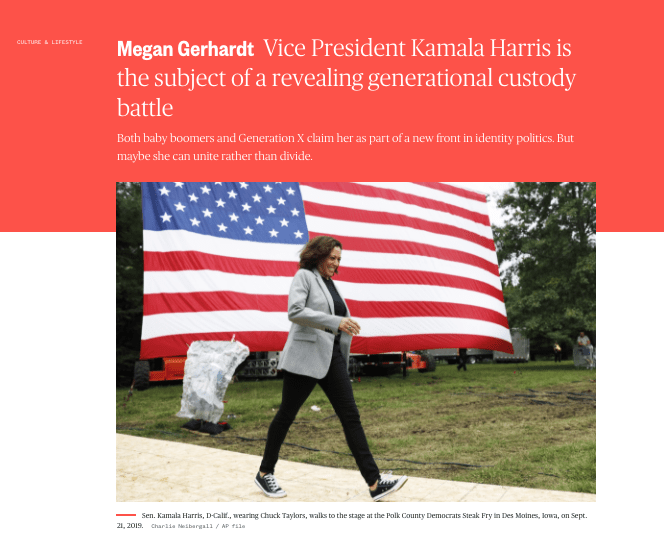
Once Biden was announced as the Democratic candidate, his choice of Kamala Harris as a running mate energized his support. Harris herself was the subject of a generational custody battle, with both Boomers and Gen Xers making the case that she belonged in their generational tribe. I wrote about this phenomenon too–you can check it out here.


I will admit that I am on the lookout, which might be why Gentelligence® is everywhere. But part of my mission is to help others begin to see it as well when they look at the world–it often is at the heart of innovation, and a lack of it is frequently the cause of misunderstandings and miscommunications. “Not Gentelligent!” and “That’s Gentelligence® right there” are lenses through which I see so much now. How about you?


By Megan Gerhardt February 13, 2026
It has been said that everything old becomes new again on a long enough timeline. There's a fascinating generational trend I've been seeing among younger Gen Zs and the oldest of Gen A (Note: I am not calling that generation Gen Alpha, because that name is nonsensical and outdated already, and that generation is barely in their teens. More on that soon)--a craving for low-tech, no-tech, screen-free experiences. Gentelligence focuses primarily on generational dynamics in the workplace, and I do predict this will have implications for where and how these generations want to work. Despite the chaos surrounding back-to-office policies and experiments, our youngest members of the workplace (and our soon-to-be newest employees) are showing signs that they value time away from screens. I first noticed this last year among my own students, who were overwhelmingly setting change goals in my change management class focused on reducing screen time. Versions included "cleaning up my sleep routine" (putting the phone away at least 30 minutes before bed, eliminating blue light before bed, reading physical books), "reduce my weekly screentime", "stop doomscrolling", and "impose limits on TikTok and Instagram time". It was a sign that it was no longer just their parents or older generations who wanted them off their phones; they wanted themselves off their phones, too. For a wave of young people raised in an era of tech overload, it seems we have reached the point of maximum saturation, and they are pushing back. As one of my students astutely mentioned to me last year, "There are no boundaries now...our generation is just trying to figure out how to put some of them back." I've doubled down on the need for this in my teaching, having conversations with students about how to ethically use AI as a thought-partner while balancing protected time for our most scarce resource these days: deep thinking and connection. It was this need, coupled with the overwhelming research showing the improved retention and learning that occurs when students handwrite their notes and put away their laptops in class, that led me to declare our classroom a laptop and phone-free zone. We still use slides to guide conversations, but there are no longer 30 laptop screens popped up in front of them, distracting even those who are trying hard to focus. Surprisingly, I've had very little pushback. I was concerned they would feel like I was forcing them backwards, but collectively we seem to be exhaling. The discussions have never been better. As our younger Gen Zs reach young adulthood and our oldest Gen As become teenagers, they are emerging from a kind of social experiment they entered unwittingly — a life that has never known a world without constant screens. They are realizing how different they feel when they unplug. Gen Z and Gen A even have a term for this: touching grass. That's right, when the default is constant tech immersion, they had to come up with a phrase to represent the intentional effort it takes to step away. Whenever possible, I try to engage in some real-time generational anthropology, just to explore my hunches and (when possible) debunk stereotypes. Gentelligence is all about being curious rather than judgmental, and I am most definitely curious about these early signs that our younger generations are seeking a better balance between their tech and non-tech worlds. Last month, I was in Chicago for a keynote and found myself in a trendy food hall over lunch. There were little shops surrounding the food hall, including one of my all-time weaknesses, a stationery store . Pens! Journals! Paper! Notebooks! (I, too, love the analog. After indulging myself in a number of vital paper goods, I was tucking into a sandwich in the food hall and saw a (literally) noteworthy sight: a table of early 20-somethings, gathering on their lunch hour and...writing in their journals. Multi-colored pens, stamps, and conversation were plentiful. There was not a phone in sight. That in and of itself was remarkable. It turns out that stationary stores are experiencing a resurgence . Knitting, crocheting, embroidery, and sourdough baking are also all having a moment. Physical books ( and bookstores! ) are making a comeback. A few weeks later, I was at another event, this time a very trendy commercial interior design conference, where we were discussing ways to design spaces that promote intergenerational interactions (yes, it was as cool as you might be thinking). I saw a young designer at the cocktail hour and walked over to introduce myself. I asked if I could pick her brain on something, as I figured it was part of her JOB to be up on the latest trends. I asked her whether she was feeling a personal pull to use less tech, or if this was something she had seen among her peers. That's when she told me about Analog Bags . (I won't go down that rabbit hole here, but feel free to explore the link and know that I am absolutely creating my own Analog Bag as we speak). At that same design conference, a book was recommended to me: Megatrends by John Naisbett. The gentleman who suggested it said it changed his life. He thought I would find it interesting, given my interest in generational trends, behavioral cycles, and, of course, my classes in change management. I ordered it as soon as I got back to my hotel room (fun fact: it was published in 1982, so you'll have to find a vintage copy!). I've been devouring it, and among the many eye-opening insights was the observation that " the more 'High Tech' we become, the more we need 'High Touch.” Now, Naisbett was referring to the high-tech era of the early 1980s, when personal computers were entering the scene, but the relevance of the comment almost 45 years later, in the age of AI, was not lost on me. Those who have lived their entire lives as products of high-tech are now blazing the trail to meet their need for high touch. Let this be my formal declaration (for whatever it's worth) that I predict our youngest generations will lead us back to a balance between tech and high-touch: they are the proverbial canaries in the coal mine, and their message is clear. They are living, breathing embodiments of a life flooded with endless tech, fake news, constant connectivity, dopamine hits, and input dictated by algorithms, and it appears they may have had enough.
By Megan Gerhardt January 12, 2026
What if every generation is trying to be respectful, but what that means is entirely different depending on when you grew up?
By Megan Gerhardt November 16, 2025
Explores how AI thinks different generations write emails
By Megan Gerhardt September 12, 2025
Curse of Knowledge: experts can't imagine not knowing what they know. In workplaces, generations assume others share their experience, causing miscommunication.
By Megan Gerhardt August 31, 2025
Maybe i do too.
By Megan Gerhardt July 13, 2025
It wasn't a planned comment.
By Megan Gerhardt May 19, 2025
I've always loved invisible ink.
By Megan Gerhardt May 6, 2025
the plot thickens.
By Megan Gerhardt April 10, 2025
The difference between multigenerational workforce and intergenerational workforce and why it matters.
By Megan Gerhardt March 25, 2025
Here's the thing about water.