Gentelligence: About Those Millennials

Happy New Year! 2021 is the Year of Gentelligence. The book is coming out in June. and I’m dedicating this winter and spring to sharing tools and ideas to help you build up your Gentelligence. Our 2021 Gentelligence lessons start with a better understanding of the Millennials. (And just so you know, I love Millennials. I did a TEDx talk about it, so you know it’s true). A force to be reckoned with, they upended the way many workplaces had been thinking about younger talent and brought generational differences back into the forefront of conversation (and headlines). Gentelligence tells us that we can only begin to learn and teach a generation if we take time to understand them, and how their generational identity has contributed to how they see the world.
Happy 40th Birthday, Millennials!
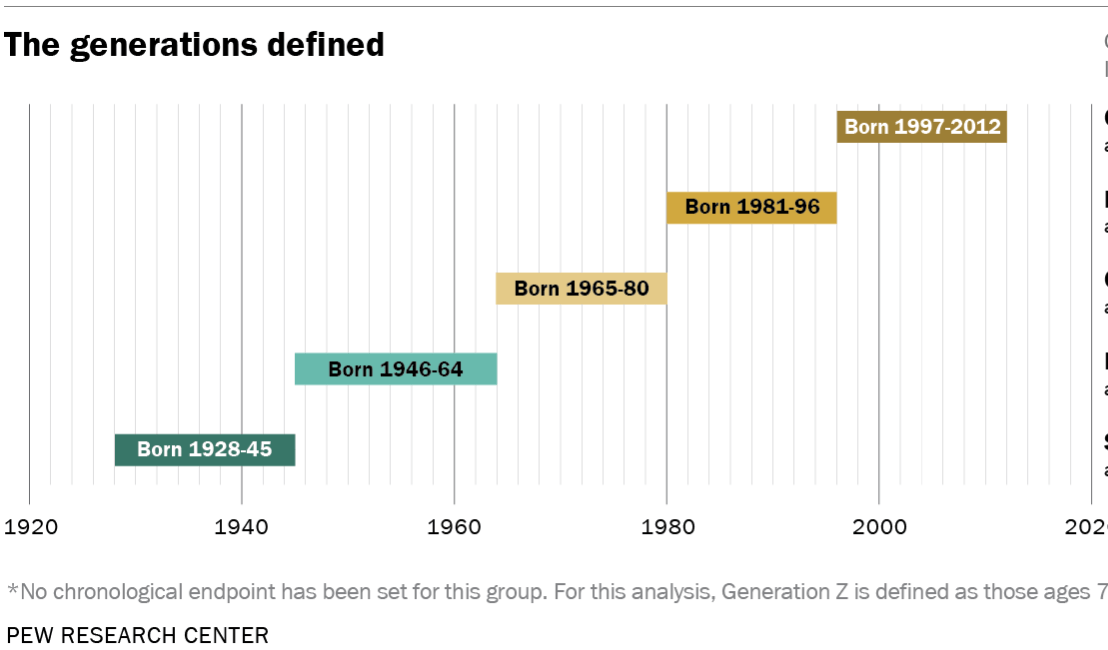
This past week on my social media, I wished our oldest Millennials a happy 40th birthday in 2021. That’s right–while so many enjoy using the term “Millennial” to refer to all young people, they are not forever suspended in time. Born 1981-1996, they will be 25-40 years old in 2021. Still “young”, relatively speaking, but not “punk teenager” young. Not “kids these days” young. So the first Gentelligence lesson of this year is to stop using the word as a sweeping term for young people that disagree with you (doing this makes us no better than those using the “OK Boomer” retort, and we can all do better).
More insight on the Millennials: I often am asked why this generation are called “Millennials” if their birth years don’t include the actual…Millennium. (There’s much debate about generational cutoffs, but I like to nip that in the bud and use the Pew Research Center‘s ranges on this. As with any subject, research and insights cannot move ahead if we are stuck forever in arguing what framework to use. Generations are determined using a lot of factors–formative events in society and culture that are likely to result in different collective experiences for those growing up during different periods of time. It’s an art and also a science of sorts. So I’m calling for everyone interested to just get on board with the Pew Research Center’s guidelines and end this nonsense so we can move on). Everyone with me?
Drawing Lines
Back to the Millennium. I love the school of thought behind generational cutoffs. Because we want a generation to represent a group of people who have experienced formative events during a similar life stage, we think about the things that will likely change how they grow up, the challenges they will face, and the opportunities they will have.
Among other notables, 9/11 and the turning of the Millennium are some of the key events we believe have influenced the early years of this generation. Our oldest Millennials would be coming of age at the turn of the Millennium. To determine a cutoff, we had to determine how old would one need to be at the turn of the century to remember it. It was decided that 4 years old was a reasonable age. Those 4 at the turn of the century would be about 5 when 9/11 occurred. And so the cutoff for the Millennial Generation was established for 1996.


Entitled or Proactive?
Interesting, right? Every generation has these kinds of formative stories, and understanding them can help us develop a greater understanding of why different generations may have a different lens through which they see the world. There’s a quote I love by Elwood Carlson, who said, “Generations help us understand the context in which your life has unfolded.”
Millennials developed a strong reputation for being outspoken and demanding–the most frequently used word used to describe them has been “entitled”. Yet if we dig deeper into the zeitgeist of the world when Millennials were growing up, we can see where this reputation may have come from, and we may also be able to step back and reframe our judgments about it.
Older generations were raised with more of a “children should be seen and not heard” mentality. This approach to parenting was long gone by the time the first Millennials were born. They were the children of Baby Boomers who had worked hard to accomplish career success (and often the monetary success that came with it). The Boomers wanted to give their kids opportunities they didn’t have had as children of the Greatest Generation (who struggled to rebound economically after the Great Depression and WWII).
To Whom Much is Given, Much is Expected.
What would be possible for our children if they were given every opportunity for education, development, and success??? It was a way for the driven and optimistic Baby Boomers to unlock yet another level of achievement and success–by raising fully developed and highly successful children.
This led to kids being enrolled in classes and sports earlier than we had ever seen before. Mommy and Me classes, Itty Bitty Soccer, early language immersion, three-year-olds taking Spanish. This began to breed a bit of competition and FOMO (fear of missing out, for you less hip kids) in this generation, and in their parents. Little Jimmy needed to be in town for the summer or he couldn’t be on the Little League team! And if he wasn’t on the Little League team, he wouldn’t be ready for junior varsity! And that would mean he might not play baseball in college! So he better start at age 4, and mom and dad needed to drive him to practice every night and cancel summer vacation so he wouldn’t be behind or miss out on the opportunity.
Trophies for Everyone!
Thus the era of the “trophy kids” was born. Everyone expected to make the team so they wouldn’t miss out on opportunities. This was also the beginning of “helicopter parents”. Parents hovering just close enough to make sure their kids were included and treated like the special people they were. While well-intentioned, this level of attention and intervention resulted in a generation with almost no free time to be bored. It also meant they had little chance for failure, or to develop the same kinds of resiliency that had been built into past generations.
By the time these kids applied for college, the pressure was pretty intense. When I (a Gen Xer) applied to college in 1994, you basically just needed to have a respectable ACT score and a high school diploma to get into the school of your choice. By the time the first Millennials went to college, they needed to show a steady record of extracurriculars and leadership ability. 18-year-old bilingual soccer team captains who were proficient in the flute and volunteered for Meals on Wheels had become the norm.
As a professor, I was asked a few years ago to help review the applications for a prestigious full-ride scholarship to our university. I was both humbled and terrified. These kids had started non-profits. Developed sources of clean water for third world countries. Ran for office! All before age 18. What was I doing with my life? (Was there any hope for my teenager, sitting at home playing X-box?)
So perhaps it should come as no surprise that the children that were so highly invested in arrived at universities and workplaces ready to be heard. The children whose schedules and needs drove the priorities of the family? They grew up into driven adults with high expectations for their own development and contributions.
You Say Entitled, They Say Proactive
They were the most educated, invested-in generation we had ever produced, and wanted to bring that same level of intensity to their careers. For older generations that had been expected to start at the bottom of the corporate ladder and work their way up, this thirst for advancement and development looked a lot like entitlement. But to our Millennials, it was simply being proactive and receiving the same level of attention and involvement they had experienced throughout their lives.
This was the dynamic I first stepped into when I began doing generational consulting in the early 2000s. Managers (most of them Baby Boomers) were tearing out their hair trying to figure out how to understand and lead “those Millennials”. Yet ironically, many of them were the parents of children the same age as their young employees. They admitted they had raised their own Millennial kids with similar drive and expectations of the world around them. But when these needs came instead from their employees, it was a completely different animal, thus setting the stage for years of angst and generational tension in the workplace.
But those Millennials are no longer kids. They are now the ones hiring and training an entirely new generation of employees. The future of generational dynamics will be determined by today’s Millennial managers, who stand to be leading our companies for decades to come. Will they embrace the generational differences the Zoomers will bring their door? Or dig in their heels wanting things done the way they have always done them? Stay tuned.
Want to continue building your Gentelligence? Scroll down and sign up to have tools and ideas sent right to your inbox!