Who You Gonna Call? Crossing the Streams of Gen Z and the Boomers at Work

Megan Gerhardt • September 28, 2024

Who You Gonna Call? Crossing the Streams of Gen Z and the Boomers at Work
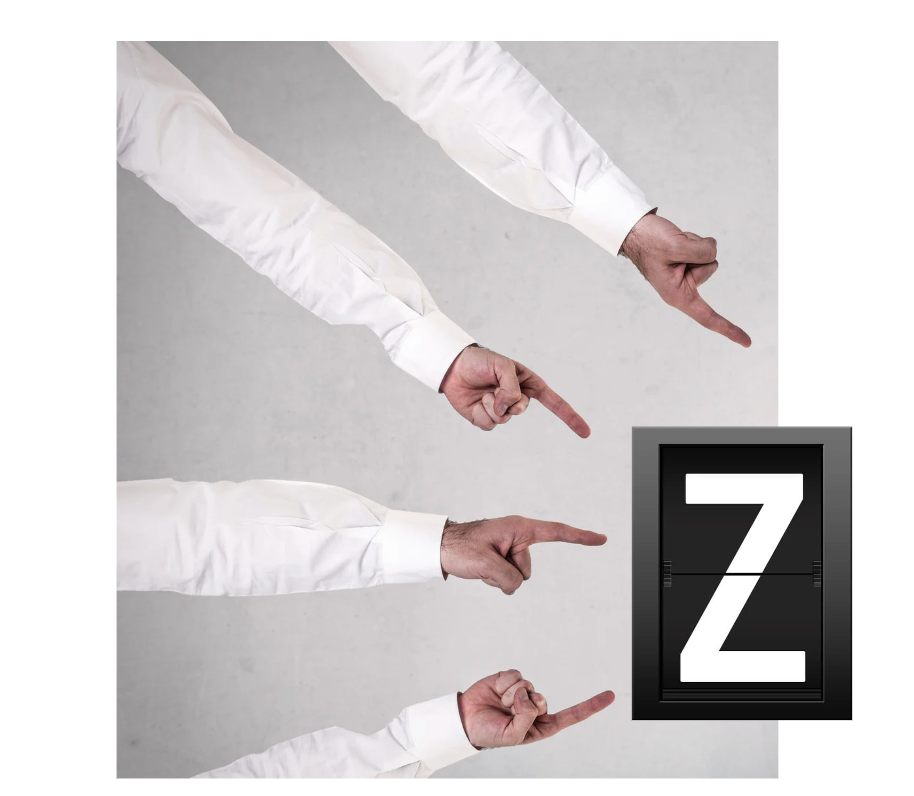
Someone Check on Newsweek.

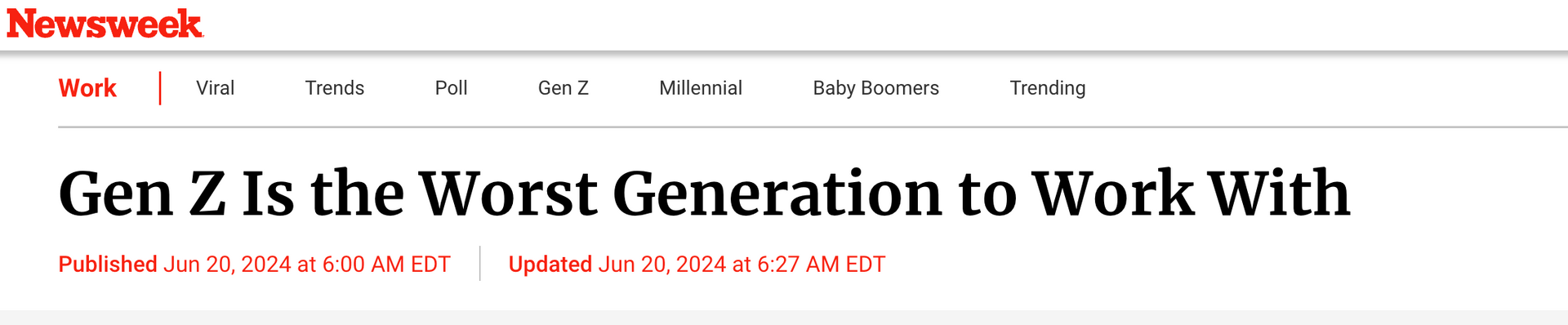
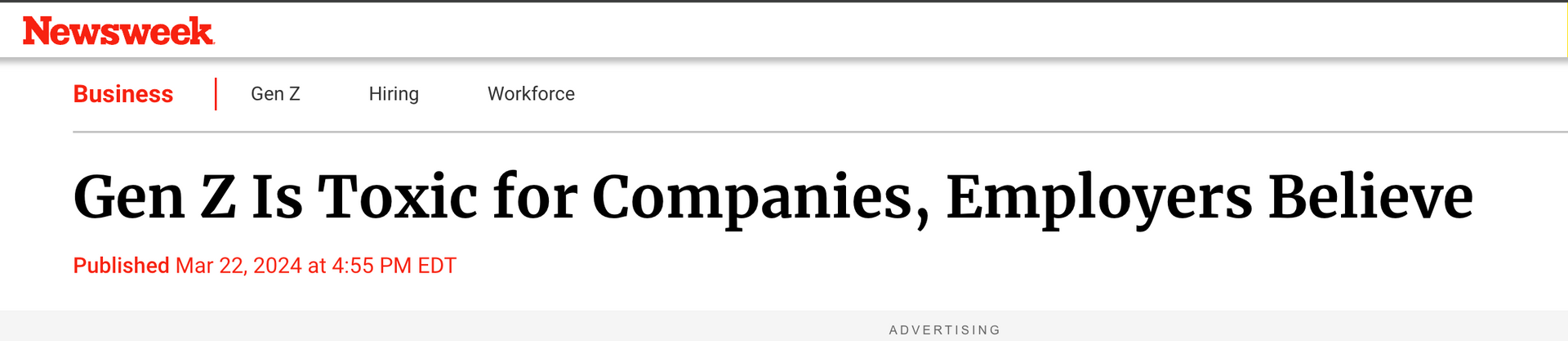
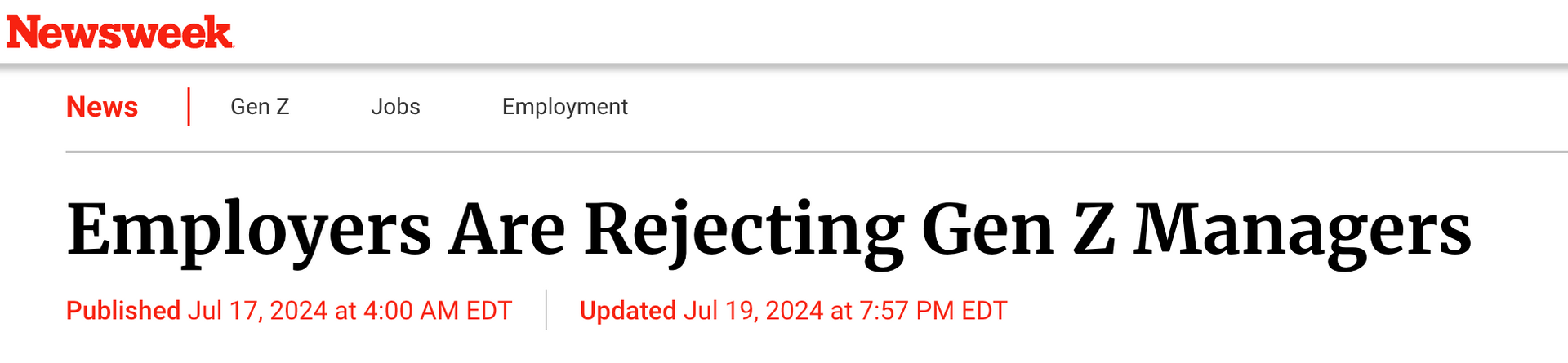
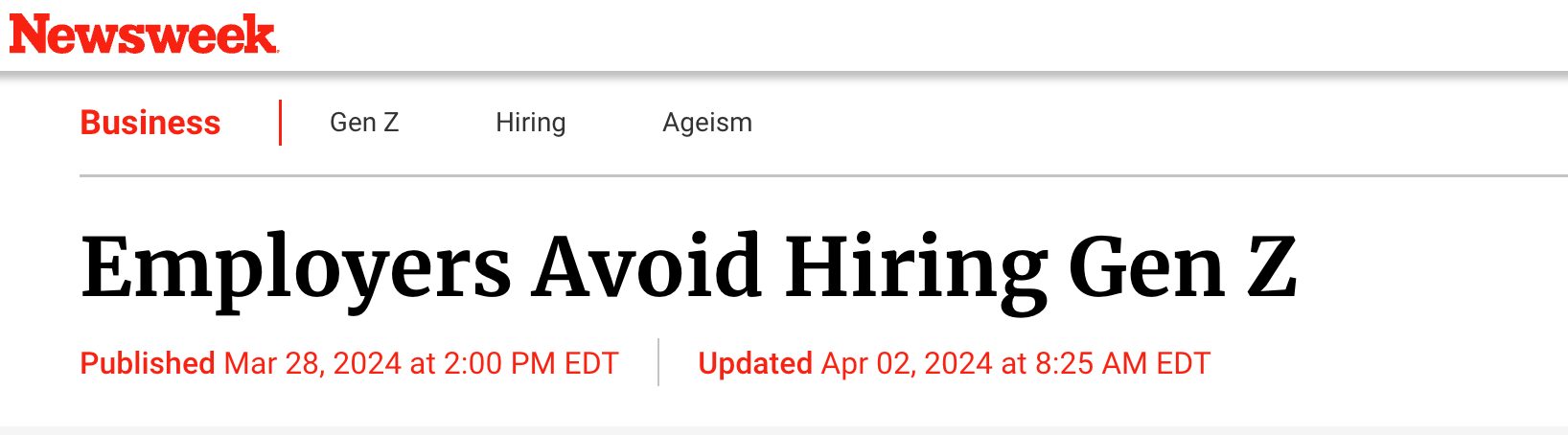
Allow me to present these headlines from the last six months:
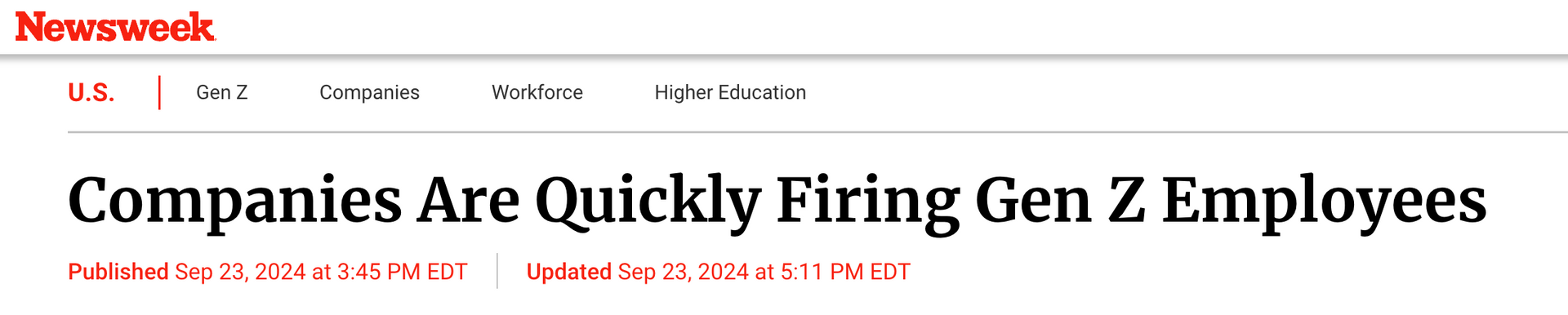
Headline
Headline
Headline
Headline
Headline

What in the world is going on here? Is Newsweek okay? Was there a meeting where Gen Z was pulled from a hat and all journalists were required to write a generationally shaming article about why we should despise them?


ENOUGH.


Let me make this as clear as possible:


  • There are roughly 69.31 million people in the United States who are part of Generation Z. This is slightly over 20% of the current US population.
  • They range from age 12 to age 27. This means they will likely be making up the youngest part of your workforce for a long time. 
  • Shaming and judging 20% of the population because they have a different set of norms as well as a new set of learning opportunities and challenges for us to support is not a good talent strategy. 


The norms Gen Z is bringing to the workplace are a product of many interacting realities, not the least of which was a global pandemic that impacted education, development, and upended workplace practices everywhere. This is our first generation to begin their careers in a hybrid/remote/post-COVID/mid-AI world of work. Do they have things to learn and improve upon? Of course. Is name calling and alienating them a good way to build the trust needed to teach them? Again, no. 

So why the surge of animosity? Newsweek isn’t alone in the piling on, and there’s something driving this uptick.

Perhaps this surge of Gen Z vitrol is due to the crossing of the streams.


Who You Gonna Call?

Loyal readers of the Gentelligence® blog will know I rarely miss a chance to make a Gen X 80s pop culture reference. (I risk losing part of my audience with this, but I view this as a Gentelligence® opportunity: if you don’t get this cultural reference, that’s absolutely understandable, but you must then go find someone over 40 to loop you in).

Today brings us yet another opportunity to harken back to classic 80s cinema, this time to Ghostbusters. Throughout the movie, we are warned of the dangers of crossing the streams.

Total proton reversal. End of life as we know it.
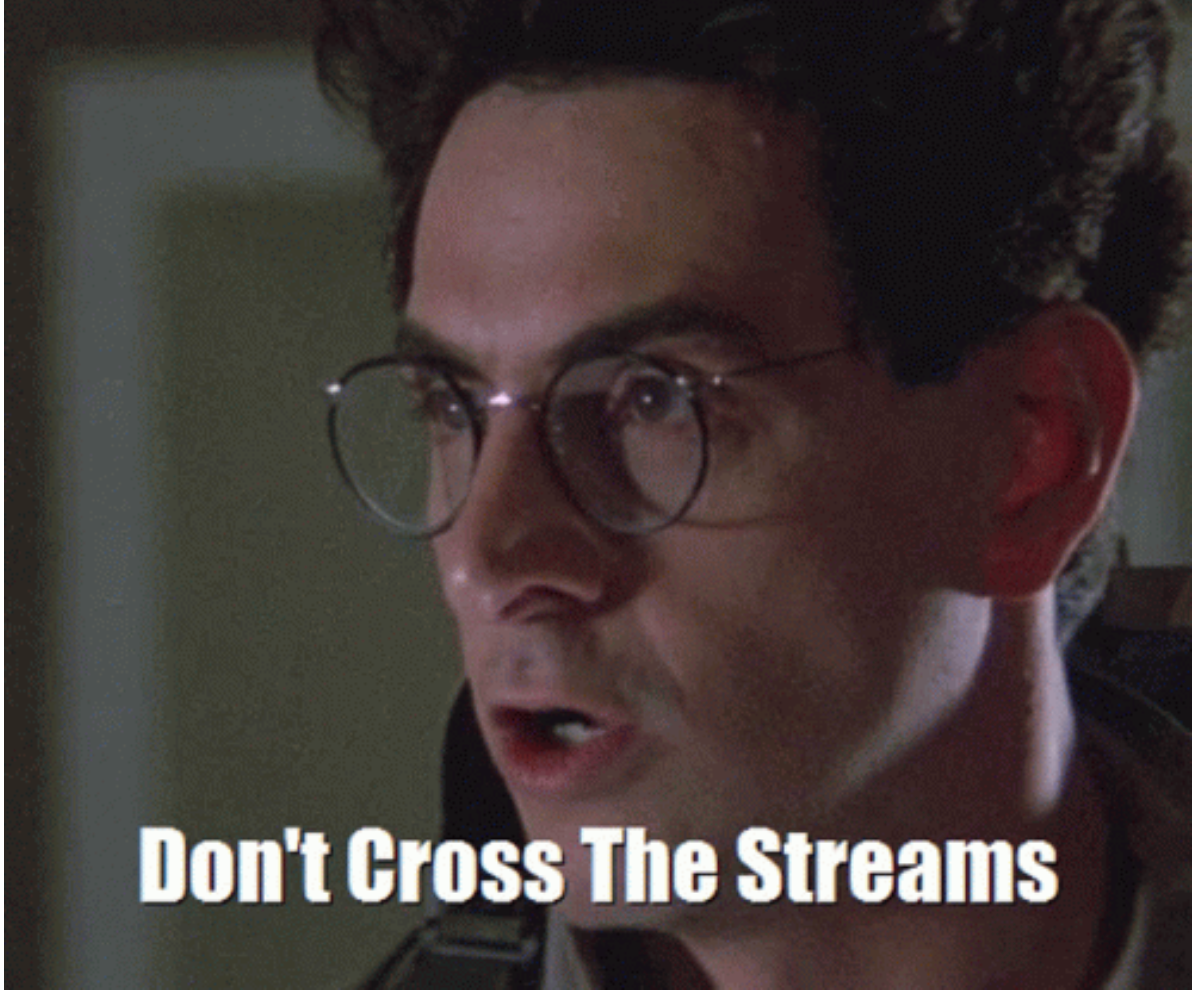
Photo of Egon saying

The important thing to remember is that you must never under any circumstances, cross the streams.”


–Dr. Egon Spengler, Ghostbusters


In the US workforce, we have successfully managed to not cross the streams for a very long time.

A New Era

But just this year, it happened. Take a look:
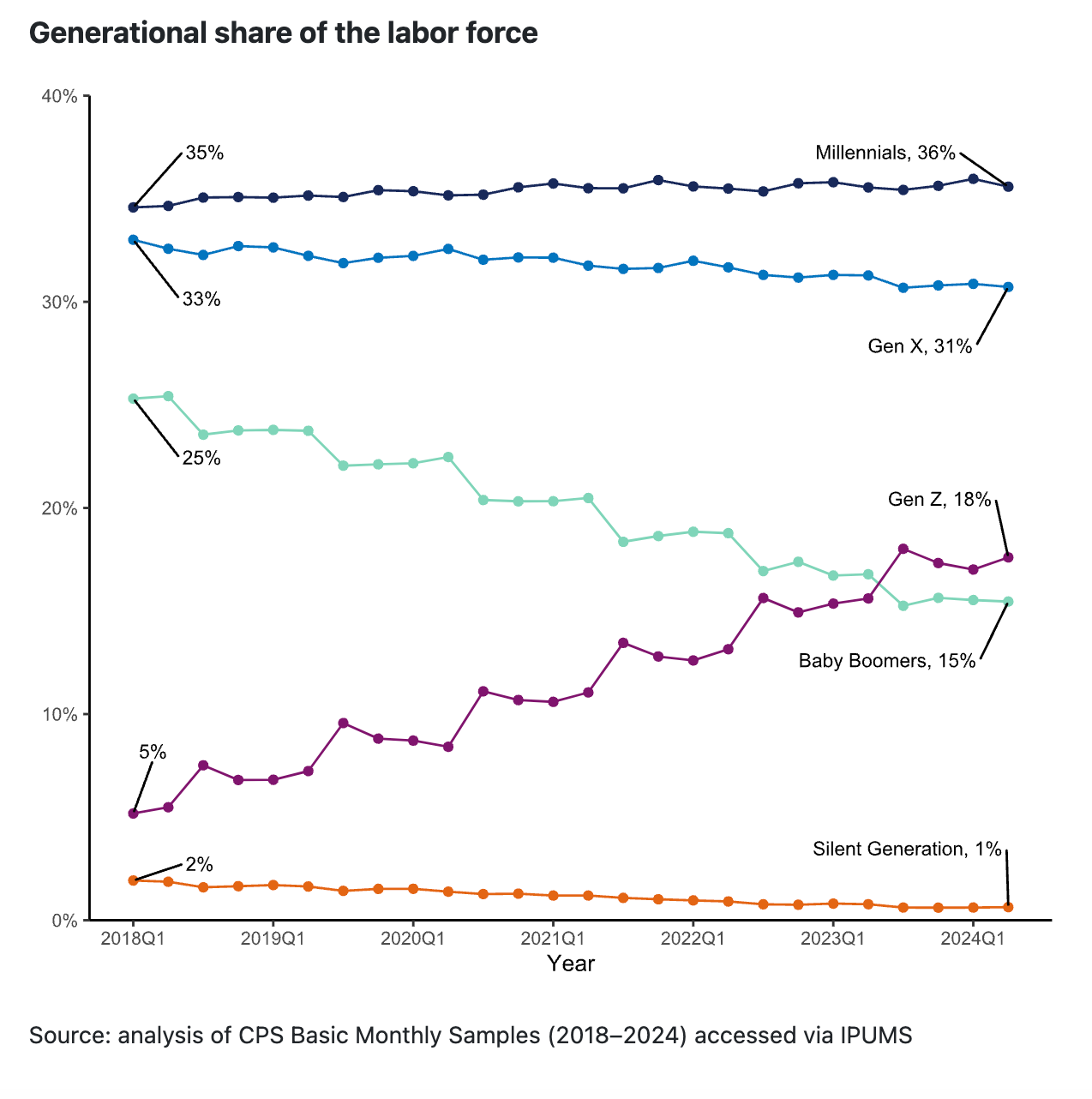
Graph showing changes in generational share of the labor force.

Department of Labor, Aug 2024


(Yes, I just did that. I did just make an amazing leap from Ghostbusters to generational dynamics. Stay with me).

The Baby Boomers have been such an anchor and shaping force to the workplace for so long. It was only in 2016 that they gave up their long held title of largest generation in the workforce (to the Millennials). And now, in 2024, we see them quietly take a 4th place slot in terms of representation: Millennials (38%), Gen X (31%) Gen Z (18%), and Baby Boomers (15%). Gen Z is taking up more space, and we are struggling to understand what that means.

The generational ebb and flow in the workplace always comes with growing pains. Remember, we called Gen X “slackers” for wanting more autonomy and work/life balance (we were ahead of our time, what can I say), we called Millennials “entitled” for wanting faster advancement and more voice than older generations. Now as the Gen Zs slowly make up more of the workforce, we’re sounding the alarm.

Firing them!

Warning them: Stop being different! We don’t like it, it’s uncomfortable.

(This is where I should remind those of us old enough to remember that at the end of Ghostbusters, they crossed the streams too. They didn’t have a choice, it was the only thing to do).



Photo of Ghostbusters using neutron blasters

No one knew what would happen (total proton reversal???) but it was what the situation required.

So what does this situation require? Gentelligence. Seeing these changing generational dynamics as an opportunity for growth and learning, not just for Gen Z, but for the rest of us as well. Firing or refusing to hire Gen Z (as so many of those Newsweek headlines proclaimed) is not a long term talent strategy.


What’s the Answer?


Examine what norms and organizational practices are still valid and vital to the a healthy, thriving workplace today. What is truly non-negotiable as it relates to our organizational cultures (my colleague Asya Miller calls this the “load bearing walls” and I am very jealous I didn’t come up with that, but have to give credit where credit is due). If there are true load bearing walls (e.g., returning to the office for a certain set of days, being able to adapt and self-directed in the face of uncertainty) that are core to who we are as an organization, take the time to explain why (see the Gentelligence tool of Pulling Back the Curtain here for how to do this well). Don’t assume it makes sense to those who may not have experienced it before or have much practice with it, and don’t assume they don’t need to understand the reasons behind those load bearing walls. This generation grew up with explanations for everything at their fingertips (thanks Alexa), and being willing to provide them will go a long way in building that needed trust to continue to teach and develop them.

Before you ask “Do we really have to do that? No one did that for us!” (I get this question a lot), consider the long term goal. Investing and developing your people is critical to every organization’s mission. While Gen Z may need development in places we assumed they would already understand, they also are bringing new kinds of skills and expertise they may have to explain to us. That too will require patience and trust, and a willingness to take the time to slow down and teach new ways of looking at things. Mutual respect is always a good investment.



By Megan Gerhardt February 13, 2026
It has been said that everything old becomes new again on a long enough timeline. There's a fascinating generational trend I've been seeing among younger Gen Zs and the oldest of Gen A (Note: I am not calling that generation Gen Alpha, because that name is nonsensical and outdated already, and that generation is barely in their teens. More on that soon)--a craving for low-tech, no-tech, screen-free experiences. Gentelligence focuses primarily on generational dynamics in the workplace, and I do predict this will have implications for where and how these generations want to work. Despite the chaos surrounding back-to-office policies and experiments, our youngest members of the workplace (and our soon-to-be newest employees) are showing signs that they value time away from screens. I first noticed this last year among my own students, who were overwhelmingly setting change goals in my change management class focused on reducing screen time. Versions included "cleaning up my sleep routine" (putting the phone away at least 30 minutes before bed, eliminating blue light before bed, reading physical books), "reduce my weekly screentime", "stop doomscrolling", and "impose limits on TikTok and Instagram time". It was a sign that it was no longer just their parents or older generations who wanted them off their phones; they wanted themselves off their phones, too. For a wave of young people raised in an era of tech overload, it seems we have reached the point of maximum saturation, and they are pushing back. As one of my students astutely mentioned to me last year, "There are no boundaries now...our generation is just trying to figure out how to put some of them back." I've doubled down on the need for this in my teaching, having conversations with students about how to ethically use AI as a thought-partner while balancing protected time for our most scarce resource these days: deep thinking and connection. It was this need, coupled with the overwhelming research showing the improved retention and learning that occurs when students handwrite their notes and put away their laptops in class, that led me to declare our classroom a laptop and phone-free zone. We still use slides to guide conversations, but there are no longer 30 laptop screens popped up in front of them, distracting even those who are trying hard to focus. Surprisingly, I've had very little pushback. I was concerned they would feel like I was forcing them backwards, but collectively we seem to be exhaling. The discussions have never been better. As our younger Gen Zs reach young adulthood and our oldest Gen As become teenagers, they are emerging from a kind of social experiment they entered unwittingly — a life that has never known a world without constant screens. They are realizing how different they feel when they unplug. Gen Z and Gen A even have a term for this: touching grass. That's right, when the default is constant tech immersion, they had to come up with a phrase to represent the intentional effort it takes to step away. Whenever possible, I try to engage in some real-time generational anthropology, just to explore my hunches and (when possible) debunk stereotypes. Gentelligence is all about being curious rather than judgmental, and I am most definitely curious about these early signs that our younger generations are seeking a better balance between their tech and non-tech worlds. Last month, I was in Chicago for a keynote and found myself in a trendy food hall over lunch. There were little shops surrounding the food hall, including one of my all-time weaknesses, a stationery store . Pens! Journals! Paper! Notebooks! (I, too, love the analog. After indulging myself in a number of vital paper goods, I was tucking into a sandwich in the food hall and saw a (literally) noteworthy sight: a table of early 20-somethings, gathering on their lunch hour and...writing in their journals. Multi-colored pens, stamps, and conversation were plentiful. There was not a phone in sight. That in and of itself was remarkable. It turns out that stationary stores are experiencing a resurgence . Knitting, crocheting, embroidery, and sourdough baking are also all having a moment. Physical books ( and bookstores! ) are making a comeback. A few weeks later, I was at another event, this time a very trendy commercial interior design conference, where we were discussing ways to design spaces that promote intergenerational interactions (yes, it was as cool as you might be thinking). I saw a young designer at the cocktail hour and walked over to introduce myself. I asked if I could pick her brain on something, as I figured it was part of her JOB to be up on the latest trends. I asked her whether she was feeling a personal pull to use less tech, or if this was something she had seen among her peers. That's when she told me about Analog Bags . (I won't go down that rabbit hole here, but feel free to explore the link and know that I am absolutely creating my own Analog Bag as we speak). At that same design conference, a book was recommended to me: Megatrends by John Naisbett. The gentleman who suggested it said it changed his life. He thought I would find it interesting, given my interest in generational trends, behavioral cycles, and, of course, my classes in change management. I ordered it as soon as I got back to my hotel room (fun fact: it was published in 1982, so you'll have to find a vintage copy!). I've been devouring it, and among the many eye-opening insights was the observation that " the more 'High Tech' we become, the more we need 'High Touch.” Now, Naisbett was referring to the high-tech era of the early 1980s, when personal computers were entering the scene, but the relevance of the comment almost 45 years later, in the age of AI, was not lost on me. Those who have lived their entire lives as products of high-tech are now blazing the trail to meet their need for high touch. Let this be my formal declaration (for whatever it's worth) that I predict our youngest generations will lead us back to a balance between tech and high-touch: they are the proverbial canaries in the coal mine, and their message is clear. They are living, breathing embodiments of a life flooded with endless tech, fake news, constant connectivity, dopamine hits, and input dictated by algorithms, and it appears they may have had enough.
By Megan Gerhardt January 12, 2026
What if every generation is trying to be respectful, but what that means is entirely different depending on when you grew up?
By Megan Gerhardt November 16, 2025
Explores how AI thinks different generations write emails
By Megan Gerhardt September 12, 2025
Curse of Knowledge: experts can't imagine not knowing what they know. In workplaces, generations assume others share their experience, causing miscommunication.
By Megan Gerhardt August 31, 2025
Maybe i do too.
By Megan Gerhardt July 13, 2025
It wasn't a planned comment.
By Megan Gerhardt May 19, 2025
I've always loved invisible ink.
By Megan Gerhardt May 6, 2025
the plot thickens.
By Megan Gerhardt April 10, 2025
The difference between multigenerational workforce and intergenerational workforce and why it matters.
By Megan Gerhardt March 25, 2025
Here's the thing about water.